



Forklift Winter Prep Checklist: What to Fix Before Cold Mornings Start
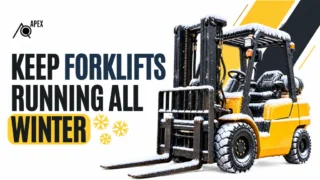
Cold weather turns small forklift problems into stopped shifts, and the best time to fix them is before the first cold morning, not after. A short checklist covering the battery, coolant, fluids, tires, brakes, and lights catches most of what goes wrong when temperatures drop.
Why Cold Mornings Are Hard on a Forklift
A forklift does not fail because winter shows up. It fails because winter finds a weak spot that was already there. A battery that was getting tired in summer, a tire that was running low, or a small leak that was easy to ignore in warm weather all get worse when the temperature falls.
Cold also changes how a machine behaves. Oil and hydraulic fluid get thicker, so the lift can feel slow until the machine warms up. Batteries hold less power. Engines take longer to start and need more time to warm up before they carry a load.
The Cold Morning Test: Do This First
Before you start fixing things, find out what your forklift actually does on a cold start. This takes a few minutes and tells you where to look.
On the first cold morning, or the first one you can plan for, watch for these things:
- How many tries it takes to start
- How long it takes before the lift and tilt feel normal
- Any warning lights, strange sounds, or smells
- Any new drips under the machine after it sits overnight
- How the brakes feel on the first few stops
Write down what you see. A simple note on your phone is enough. If something feels different from last year, or different from the machine next to it, that is the place to start your checklist. Most businesses never record this, and it turns a vague feeling that something is off into something a technician can act on.
The Winter Prep Checklist, System by System
Battery and charging
Cold weather is hard on batteries. A battery that is weak in warm weather often gives out in the cold. Have the battery and the charging system tested before winter, not once the machine will not start. For electric forklifts, this also means checking cables and connections for dirt or wear, since a poor connection wastes power that is already reduced by the cold.
Cooling system
The cooling system needs clean coolant with the right mix of antifreeze. Old or weak coolant can freeze or fail to protect the engine. Many shops suggest flushing and refilling it once a year, and fall is a good time to do it.
Oil, filters, and fluids
Dirty oil causes more trouble in cold weather. Change the oil and filter on schedule, and ask whether a lighter oil is better for the cold in your area. Check the fuel, air, hydraulic, and transmission filters at the same time. Look at fluid levels too, since low fluid is easy to miss and can cause damage when the machine is already working harder.
Hydraulics
Look at hoses, fittings, and cylinders for leaks, cracks, or wet spots. Cold makes small leaks worse because seals and hoses get stiffer. If the lift is slow or jerky even after warming up, that is worth a closer look before it turns into a full failure.
Tires
Check tire pressure and tread. Pressure drops when temperatures drop, and low pressure hurts traction and stability. In winter, check pressure more often than you do in summer, since a small drop can change how the forklift handles with a load on the forks.
Brakes
Brakes matter all year, but cold and wet surfaces leave less room for error. Test the brakes and check for soft pedals, pulling to one side, or longer stopping distances.
Lights and warning signals
Days are shorter in winter, so working lights, tail lights, and warning lights matter more. Make sure every light works and every warning signal sounds.
Exhaust
For engines that burn fuel, have the exhaust system checked for leaks. This matters most when forklifts run inside buildings with doors closed to keep the cold out, since leaks can let harmful fumes build up.
What You Can Check Yourself and What Needs a Technician
Not every item on the list needs a technician, and not every item should be done by an operator. A clear split keeps small jobs moving and big jobs safe.
Operators can usually handle:
- Walking around the machine and looking for drips or damage
- Checking tire pressure and looking at tread
- Making sure lights and horns work
- Noting how the machine starts and feels on a cold morning
- Reporting anything that feels different
A technician should handle:
- Battery and charging system testing
- Flushing and refilling coolant
- Hydraulic leak checks and repairs
- Brake inspection and repair
- Exhaust leak checks
- Anything that involves a warning light or a repeated problem
If you are not sure which side something falls on, treat it as a technician job. A quick look from a trained person costs less than a breakdown in the middle of a shift.
A Simple Timeline for the Season
Winter prep works best when it is spread across a few weeks, not crammed into one day.
- Now, before the first cold snap. Do the cold morning test, write down what you see, and book any repairs the notes point to.
- Before the first hard freeze. Have the battery, coolant, and brakes checked. Get tires set to the right pressure.
- During winter. Check tire pressure more often, keep an eye on fluid levels, and report any change right away.
Common Questions About Winter Forklift Prep
When should I start winter prep on my forklifts? Early in the fall, before the first cold snap. This leaves time to fix problems before cold mornings make them worse.
Do electric forklifts need winter prep too? Yes. Cold weather reduces battery power, so the battery, charger, and cables are worth testing before winter.
Why does my forklift lift slowly on cold mornings? Hydraulic fluid gets thicker in the cold, so the lift can feel slow until the machine warms up. If it stays slow after warming up, have it checked for leaks or worn parts.
How long should I let a forklift warm up? It depends on the machine and the temperature, so follow what the maker recommends. Engines that burn fuel generally need a few minutes before they carry a load.
Can winter prep be done at my location? In most cases, yes. A technician can test batteries, check fluids, and inspect hydraulics and brakes on site, without moving the machine.
The Mistake That Costs the Most
The most expensive winter mistake is waiting for something to break and calling it winter damage. Most cold weather failures started as something small in the fall, like a weak battery, a slow leak, or a soft brake. A forklift that gets checked before the cold arrives has a much better chance of making it through the season without a surprise stop.
Do Not Let the First Cold Morning Stop Your Shift
A short checkup now costs far less than a breakdown in the middle of your busiest week. Apex Forklift Solutions provides on site forklift diagnostics, preventive maintenance, and repair across Belen, Albuquerque, Rio Rancho, and Central New Mexico, with travel further out available depending on the job. Reach out today to get your forklifts checked and fixed before the cold sets in.